
How BMC Brighton Helped Ruma Recover after a Heart Attack
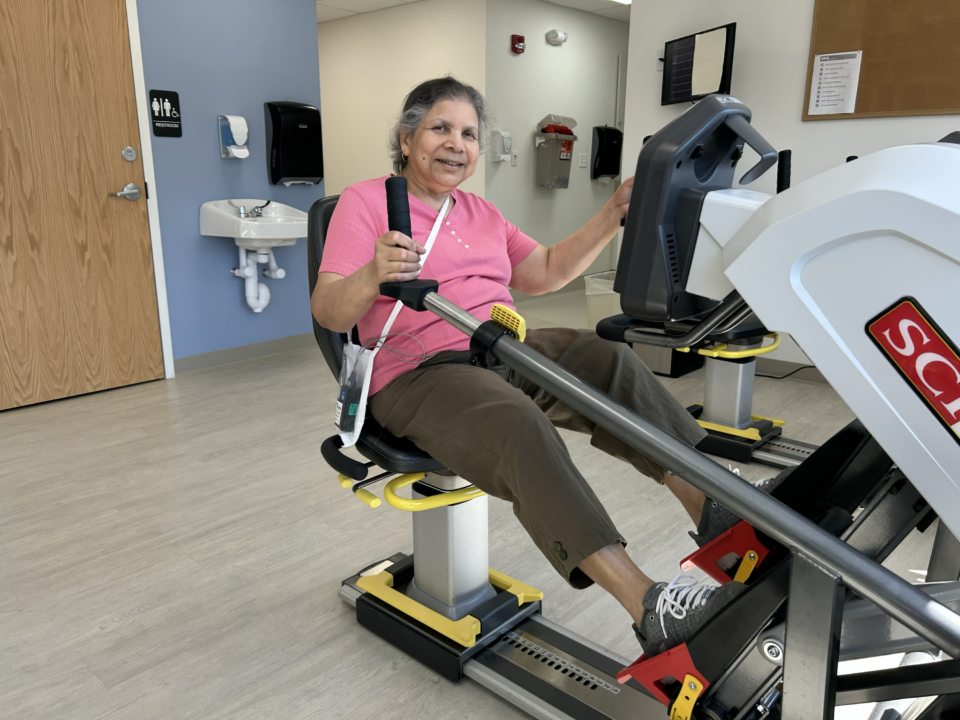
For much of her life, Ruma focused on caring for others, managing family responsibilities, and pushing through her own discomfort. After a major heart attack, cardiac rehab has given her a structured way to focus on herself.
There is a misconception that heart attacks always happen out of nowhere. While a heart attack can be sudden and unexpected, heart disease often develops over many years. And when warning signs do appear, it can be easy to downplay their severity. That was the case for Ruma.
Ruma had been managing high blood pressure since the birth of her daughter in 1993. Then, one day in 2023, pain shot through her right side, right arm, and left arm. It was out of the ordinary, but she took some Tylenol and waited for it to pass. It did—for a while.
The pain kept returning a little stronger, but each time, the idea of seeking care would quietly get pushed aside. “I thought if I took a painkiller, it would go away,” Ruma admits. “But by Thanksgiving and Christmas, I was in so much pain that I couldn’t even carry my purse.”
This continued into the new year, but Ruma postponed care even further when her mother sadly passed away in her hometown of Kolkata, India, in December of 2024. “I had to take care of my mother’s funeral. I thought that was more important than my health,” she reflects.
Emergency Heart Care at BMC Brighton
Two years after that first moment of pain, Ruma still had not seen a doctor. In July 2025, she came home from work and was met with a heavy, burning pain on both sides of her back that stretched from her waist to her shoulders. She lay down and took medicine, as she had done before, but the pain wouldn’t go away.
“My family was there and I told them to put ice on my back, but that didn’t help. They realized there was nothing else they could do, so they called 911. They told me I was having a massive heart attack,” she recalls.
On the ride to the hospital, paramedics worked to safely stabilize Ruma’s heart. As they did, the ambulance took her directly to Boston Medical Center – Brighton (BMC Brighton), where Tariq M. Bhat, MD, who directs the Structural Heart Disease Program, was ready to take over her care.
“Ruma was experiencing a STEMI, one of the most serious types of heart attack,” Dr. Bhat explains. “In her case, a major coronary artery was almost completely blocked, preventing blood from reaching part of her heart muscle. Situations like this require immediate treatment because every minute matters.”
“We placed two stents that night to restore blood flow to the heart and stabilize her condition,” Dr. Bhat says. “That is the first and most important step in treating a heart attack like this.”
Ruma spent that first night in the ICU. By the next day, there was another decision to make. Two other coronary arteries were approximately 75 percent blocked, and both still needed stents. She could go home and recover for a week, then return for another procedure, or she could have them placed while she was already in the hospital. “I was still uncomfortable and couldn’t breathe well,” Ruma says. “The idea of leaving and coming back sounded awful. I was already there. I thought, why not do it then?”
In total, Ruma received four stents and spent three nights at BMC Brighton, including two in the ICU.
A Clear Cardiac Difference and a Return to Care
On the fourth of July, Ruma was sent home with her family. Almost immediately, she noticed a clear difference. Before her heart attack, she would walk regularly for her exercise, but she would lose her breath and was limited on how far she could walk. At the time, she blamed age, fatigue, or the summer heat, but now, after the four stents, she was walking further and longer than before.
With support from her family, Ruma continued to make progress. But in January 2026, another episode brought her back into care, and Dr. Bhat quickly recognized what was happening.
“Coronary artery disease is an ongoing condition that requires careful monitoring,” says Dr. Bhat. “When we identified a new blockage developing between two previously placed stents, we were able to intervene early and restore blood flow before it caused more serious problems.”
The procedure was successful, but it also made one thing clear: Ruma could no longer rely on self-managing symptoms as they appeared. Protecting her heart health would require a more structured, ongoing approach. That approach would come through the Bernard D. Kosowsky, MD Cardiovascular Rehabilitation Center.
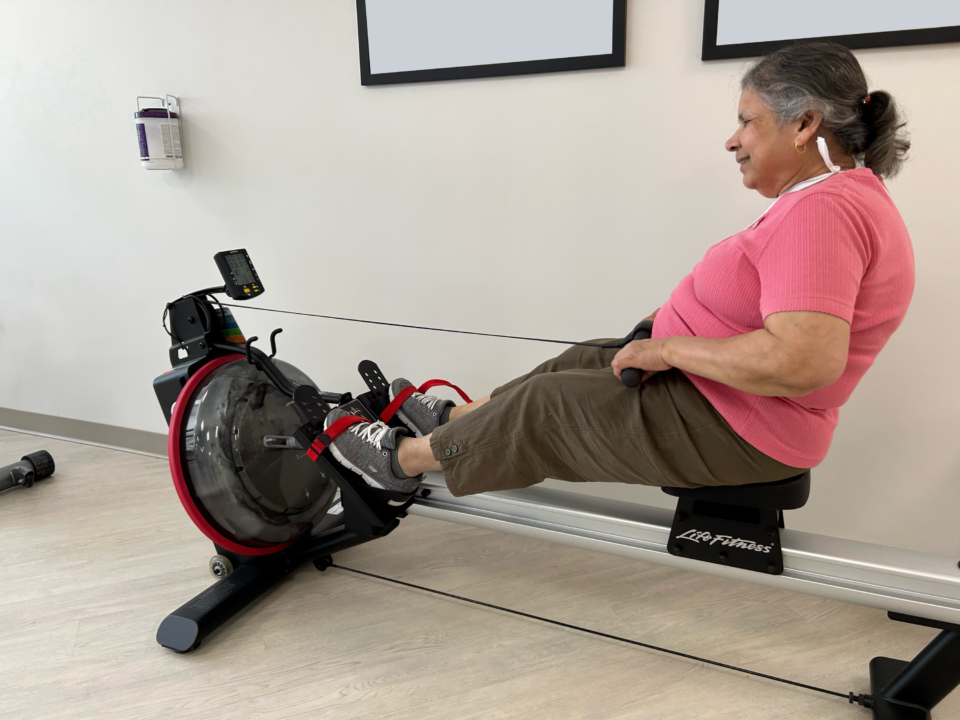
At BMC Brighton’s Kosowsky Cardiac Rehab Center, each of Ruma’s goals is explained and each session helps Ruma build confidence.
The Kosowsky Cardiac Rehab Center
The Kosowsky Cardiac Rehab Center has been part of BMC Brighton’s approach to cardiovascular care since the early 1980s. The Center’s staff work closely with cardiologists, cardiac surgeons, and other specialists to support patients recovering from major heart conditions. Today, under the leadership of Alireza Vaziri, MD, the center supports patients recovering from major cardiac events and conditions, including heart attack, heart failure, stent placement, and heart surgery. The program offers patients a safe, supervised place to rebuild strength, understand what their heart can handle, and develop long-term habits that support recovery.
“This is not just a program that looks at exercise,” says Dr. Vaziri. “We also look at every patient’s overall risk factors.”
Over the course of the 12-week, 36-session program, patients receive a personalized plan that accounts for their injuries, symptoms, medications, and risk factors that may affect long-term recovery. That plan becomes the patient’s individualized treatment plan, or ITP, which guides their progress and is, as Dr. Vaziri describes it, “like a prescription that you get from the physician.”
Ruma’s Personalized Path through Rehab
When Ruma first arrived at cardiac rehab, she was still learning what recovery would look like and what her body could safely do. Even the idea of structured exercise felt intimidating. “I was kind of totally lost,” Ruma says. “Oh my gosh, what am I going to do? I’ve never even been to a gym.” But the program gave her a place where each movement was monitored, each goal was explained, and each session helped her build confidence.
For Ruma, the individualized treatment plan brought together structured exercise, nutrition guidance, medication support, and ongoing education to help her better understand her heart health. Her care team, including an exercise physiologist, registered dietitian, cardiac nurse, and cardiac rehab physician, tracked her progress, answered her questions, adjusted her goals every 30 days, and stayed in close contact with Dr. Bhat about her recovery and medication needs. As she grew stronger, the workouts that once felt unfamiliar became part of Ruma’s routine, including the rowing machine, which became one of her favorite parts of the program.
“She has gone through the training very well, and has improved tremendously,” Dr. Vaziri says.
Making Heart Health Part of Everyday Life
The program also helps patients understand that recovery does not end after rehab. “The point,” Dr. Vaziri says, “is that we want the exercise to continue.”
Ruma now knows that she waited too long to seek care. She also knows how easily symptoms can be dismissed, especially when life feels too full to stop. For much of her life, she had focused on caring for others, managing family responsibilities, and pushing through her own discomfort. Cardiac rehab gave her a structured way to focus on herself.
Now, her recovery is not just about returning to where she was before. It is about learning how to protect her health, listen to her body, and make herself a priority. “This has been a miracle for my body,” Ruma says. “I love coming here. This is a totally different environment. I want to come here and help myself get better.”
Find Expert Care, from Evaluation to Treatment to Recovery
BMC Brighton’s Cardiovascular Medicine Department connects you with some of Boston’s top cardiologists, interventional cardiologists, electrophysiologists, and cardiac surgeons. We also offer advanced treatments for the most complex cardiac conditions from our skilled doctors, nurses, and technicians. Our department has been recognized by U.S. News & World Report for its high-performing procedures in heart arrhythmia treatment and pacemaker implantation, offering advanced care for even the most complex cardiac conditions.
Personalized Cardiac Rehab for a Stronger, Healthier Heart
The Bernard D. Kosowsky, MD Cardiovascular Rehabilitation Center is a medically supervised program that promotes heart health through education, exercise, and changes to your lifestyle. Our team of cardiologists, registered nurses, clinical exercise physiologists, and dieticians will work with you to develop a tailored plan to reduce your risk for heart attack, recurrent heart failure, or second cardiac surgery so you can keep living a long, happy, healthy, and productive life.