
Provider Spotlight: Joseph Young, MD
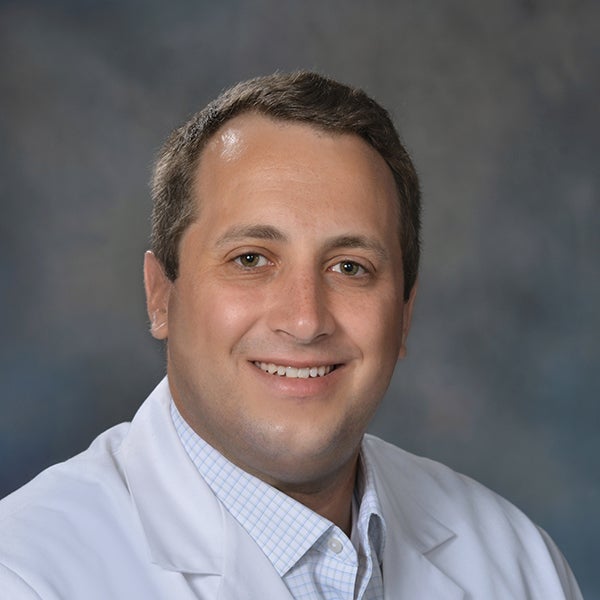
Restoring Mobility with Dr. Joseph Young
Joint Replacement Specialist Joining BMC Brighton
Joseph Young, MD, is a board-certified, fellowship-trained orthopedic surgeon specializing in hip and knee replacement practicing in the orthopedics department at Boston Medical Center – Brighton. His expertise includes direct anterior total hip replacement, minimally invasive total and partial knee replacement, revision joint replacement, robotic-assisted surgery, and fracture care. Born and raised in Massachusetts, he played football at Yale University before earning his medical degree from the University of Massachusetts. He completed his orthopedic residency at Albany Medical Center and a fellowship in adult reconstruction at Baylor College of Medicine. Dr. Young is excited to join BMC Brighton and bring his passion and expertise to the community.
What are you most excited about joining the BMC Brighton Orthopedic Surgery department?
In Brighton, we’re going to offer the most up-to-date techniques and technology available in joint replacement today. We have the latest robotic technology, which will benefit many patients, and we’re always working on getting patients home safely on the day of surgery. I always say the best place to recover is in the comfort of your own home. For certain patients, going home the day of surgery is a great benefit.
It’s important for patients to know that anything you can get at the bigger major downtown hospital centers is available in Brighton, whether that’s primary hip or knee replacement, revision surgery, robotics, or same-day discharge.
What inspired you to specialize in orthopedics?
I’ve always been interested in medicine; my dad was a primary care doctor in central Massachusetts. Playing football at Yale drew me to sports medicine and getting people back from injury. During my orthopedic residency, I was drawn to the immediate impact joint replacement surgeons could have, taking someone who struggled to walk and couldn’t enjoy their usual activities, to seeing them months later back to full strength. That’s what made me want to pursue joint replacement.
What’s the best part of being an orthopedic surgeon?
The best part is helping patients achieve their mobility goals and helping them to return to the activities they enjoy. With a relatively straightforward surgery, we can dramatically improve a patient’s quality of life, returning them to how they felt prior to the onset of their pain and debility. It is always rewarding to hear patients achieve their mobility goals, whether that is returning to the golf course, keeping up with their grandchildren, or even just going for a walk for the first time in a long time. On the other hand, it is equally enjoyable to help those patients who may be having issues with a previously placed hip or knee prosthesis, whether due to aging or loosening of the prosthesis or another complication. Surgical techniques have evolved to the point where these patients can have dramatic improvement in their quality of life after undergoing revision surgery.
What do you wish more of your patients knew about orthopedic surgery?
The biggest misconception is that total joint prostheses “wear out” after about ten years. Advancements in the prostheses and the plastics we use have made these materials last upwards of 25 to 30 years in some studies. Historically, many people have chosen to put off joint replacement because of concerns that the prosthesis will wear out, and that’s less of a concern now. A second misconception is that joint replacement is only for older adults, but many patients in their 40s and 50s with severe arthritis can also benefit greatly from joint replacement surgery. A final misconception is that life after surgery is very restrictive—with the techniques we use now, most patients have no restrictions and can get back to any activity that they enjoy.
Are there any moments throughout your career that have had a lasting impact on you?
During my fellowship in Houston, I spent a week doing hip and knee replacement surgery in Guatemala. Many patients there don’t have access to screening, so they can develop significant arthritis, often with severe deformities. Seeing the emotion from patients and their families, who were able to go from immobile to being able to walk again before we even left, was a very important experience for me, and something I hope to do again.
How do you spend most of your time outside of work?
Most of my time outside of work is spent with my wife and our one-year-old daughter, our first child. It’s been rewarding and fun, and she keeps us on our toes. When I do have free time, I enjoy staying active through physical fitness and playing golf, and I love getting outdoors with my family whenever I can. Between orthopedic surgery, golf, and a one-year-old, I stay plenty busy.