
A Relationship Built on Trust: How Long-Term Epilepsy Care Supports Lizzy through Every Stage of Life
More than a Diagnosis: A Lasting Patient–Doctor Partnership
Today, more than 20 years after being diagnosed, Lizzy continues to see Dr. Krishnamurthy and nurse practitioner Elizabeth Blocker, DNP, at BMC Brighton’s Women’s Health in Epilepsy Program. “Our collaborative practice is designed to help women with epilepsy achieve their goals with confidence and with all the support and information we can offer,” says Dr. Krishnamurthy.
Despite not knowing the cause of her condition, Lizzy has been able to identify her triggers—particularly illness and lack of sleep—and the treatments that keep her seizures controlled. She is happy to report she has been seizure-free for more than a decade. “I can’t imagine getting better, more thoughtful care from anybody else,” she says. “Dr. K is so passionate about what she does. She is very caring and wants to know about your life but is also clear cut and sensible. I trust her.”
For Dr. Krishnamurthy, caring for Lizzy has been equally meaningful. “It’s been a gift to have contributed to Lizzy’s journey,” she says. “She and many women with epilepsy honor us by sharing their challenges. We love our patients and are grateful to have an opportunity to help women with epilepsy get what they need for happiness.”
Care That Evolves with Every Life Stage
As she began thinking about having children, Lizzy trusted her care team to keep her and her family safe. “When a person is pregnant, their body changes a lot,” explains Blocker, who has training in women’s health. “They have more blood, they digest faster, and their hormone levels change”—all of which can affect antiseizure medication levels. “Our job is to make sure the amount of medication in a patient’s blood stays stable. That protects both the patient and the baby from increased seizure risk.”
What Is Epilepsy?
Epilepsy is a neurological condition that causes recurrent seizures, which can look very different from person to person. Some seizures involve brief lapses in awareness, while others—like Lizzy’s—include loss of consciousness and convulsions.
There are many treatment options available, including medications and other therapies. In the United States, an estimated 70 to 80 percent of people with epilepsy have well-controlled seizures with medication alone. With the right treatment and ongoing care, most people with epilepsy can live full, active lives.
“Proximity to the city shouldn’t decide whether someone can get quality care,” says Blocker. “Providing care closer to home makes a real difference for our patients.” For Lizzy, the flexibility to combine in-person visits with virtual check-ins has also helped her stay connected to her team, even as life gets busy.
Lizzy Is Living Fully—and without Fear
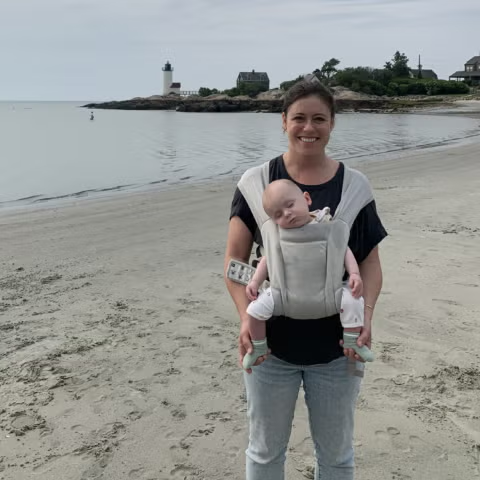
Today, Lizzy balances her health alongside parenting her two young boys with her husband, Matt, and working in sales for a wine import distribution company. She takes an antiepileptic medicine, lamotrigine, daily, and continues to check in with Dr. K and Liz regularly. She finds this connection especially important as her body adjusts postpartum, and sleep remains hard to come by with a toddler and an infant at home. “It’s not always possible to get the amount of sleep they recommend—even with a very helpful husband,” she admits. “But I know they’re really watching my levels. I feel very supported.”
Lizzy says there is still a lot of fear around epilepsy and hopes to reduce stigma by sharing her story. “People don’t understand it, and seizures can be scary to witness,” she says. “But with a doctor you trust and the right treatment, epilepsy can be effectively managed.”
Supportive Care for Seizure Diagnosis and Treatment, from Puberty to Postmenopause
The BMC Brighton Epilepsy Program provides comprehensive, holistic, and high-quality epilepsy care for patients throughout Massachusetts. We offer focused diagnostic assessments followed by detailed discussions of both novel and established treatments for seizure disorders.
Our Women’s Health in Epilepsy Program is built to support patients as whole people, offering comprehensive care that adapts to schedules and health priorities. We support our patients throughout their lives, from puberty through postmenopause, with individualized support for family planning, fertility, contraception, and beyond. Working to reduce the stigma and misinformation surrounding epilepsy, we help our patients carry successful and safe pregnancies to build their families. With locations across Massachusetts, we make care more accessible through flexible appointment options and telehealth availability.